
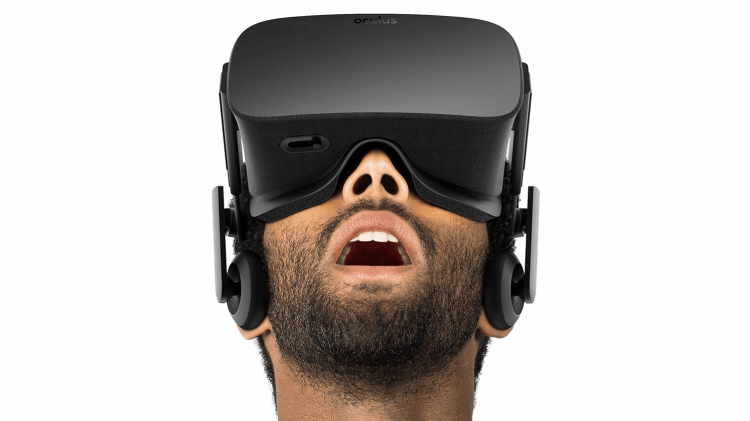
If you’ve ever used a VR headset, even a developers kit, you know that it isn’t some fad. Most people who use VR immediately become obsessed with it, and I was no different. However, due to the technology’s high cost of ownership, the market has slowly been easing into the realm of everyday use. The high cost isn’t the only reason the technology hasn’t reached the point where those in the industry want it to be. Designers around the world have been struggling to create content for VR. Luckily, my expertise in content creation and 26 years of nerdom, have granted me the ability to evaluate and make suggestions for first-movers interested in entering the VR space.
First, it is important to note that, historically, there are two industries that new technologies depend on to gain popularity. Those industries are gaming and pornography.
The video game entertainment industry, if you look closely, has always been at the forefront of new technologies. The use of accelerometers and force-feedback in mobile phones started in the gaming world. Technology like 3D was made accessible by Nintendo’s 3DS, of which over 57 million have sold to date. And video games are just a relatively new form of entertainment for technology to make its mark.
Concerning the pornography industry, it might shock you to know that almost all forms of entertainment owe their success, at least partially, to them. For the film industry, we can go as far back as the late 1800s to Le Coucher de la Mariée; considered the first pornographic film in existence. The film when released was in high demand. French filmmakers took note of this and began producing their own films, knowing people would willingly pay to see women naked. Who’d of thought?
I won’t go into too much detail, but the overall reason that porn had such an impact on this industry (and others) was because it standardized formats. When Super 8 film was released, most porn was made on that, and this made Super 8 film the most widely used form in the industry. This is a literal example of an industry adapting to technology.
Pornography also leads the charge against emerging, competing technologies. For those of us who remember, there was a fierce battle between VHS and Sony’s Betamax. Although Betamax was arguably the better quality technology, Sony’s decision to prohibit pornographic content from being produced on Betamax caused its downfall.
So, now that we know the two industries we need to create content for, we can better understand how to proceed with VR content development. The pornographic industry has already taken the necessary steps, so it would be better for us to concentrate on gaming and interactive conceptualization. People love porn, but they may not spend $600 on a technology for that sole purpose. But, if you ever met a gamer or a PC enthusiast, you know that they have no issue paying for high-end peripherals.
Now, to adapt to this market, you must first understand the hardware that people are working with and where that hardware is used and located. As of now, there are three production VR headsets available for purchase, Sony VR, the Oculus Rift, and the HTC Vive. You can count Google Cardboard if you like, but the purpose of this article is to bring true, immersive VR into daily routines.
For these headsets, you need either a Playstation 4 ($400) or a decently powerful PC (upwards of $800). Most people keep their consoles in entertainment centers in main living areas, and PCs are most commonly positioned on desks.
VR is all about immersion, so you need to design games and interactives that can bring users into the digital realm without feeling like they are still in the real world, but still incorporate surrounding elements of it. The best way to do this is to create content that uses the space around the user. Many VR companies are discovering that when you take movement control away from the player, it causes nausea and headaches. The best way to combat this is to place users in a “cockpit” reminiscent of where they would be sitting while using VR. Each VR headset is capable of standing use, but from my experience, VR needs to be controlled by the user in order to counter the effects of vertigo and reduce nausea. This is why placing the user in a virtual station, similar to the one they were already in is best practice and why cockpit games are leading in sales.
In a game, the user needs to become the driver and not the passenger, the headset is solely used for range of vision and not motion. Now, a “cockpit” doesn’t necessarily mean a literal cockpit like in an airplane. It’s mostly a vehicle for the user to control and/or feel familiar with. An existing game that does a good job of this is Keep Talking and Nobody Explodes. The premise of this game is simple. One player, wearing a VR headset, is “trapped” in a room with a bomb that must be defused. Real world players seated around the user have a manual detailing how to defuse different bombs. The VR user and friends then converse with each other to both discover the bomb they need to defuse and how to actually defuse it. Why this game succeeds is because it places the VR user in a chair in a room, exactly where they would be if they did not have a VR headset on. This aids in the immersion of the experience.Where this game goes far beyond that point is incorporating other people within the room who do not have a VR headset. Other games such as Elite Dangerous and Super Stardust Ultra VR take a more literal approach to the cockpit and place users in a spaceship with full control.

When it comes to interactive content (not necessarily games), you end up taking some control away from the user and instead provide informational cues and instances for them to interact with. The best games that simulate these experiences are, unfortunately, room-scale games where a user must stand and walk around. These are not bad games, not by any means. In fact, Job Simulator provides hours of fun and interactive experiences. However, we are trying to adapt and grow a technology. So we need simple interactive content. Placing students in a cockpit where they are a passenger on a spaceship and giving a teacher control to traverse our solar system is a good way of interactive learning for VR or go full The Magic School Bus status and dive into the body of a kid from the 90s with a sweet red hat.

The purpose of which is to gain a better understanding of the topic and this results in immersion. This is also the reason why Google and Samsung have decided to create cheaper, $100 VR headsets, which, admittedly, do less but still engage and immerse a user into a deeper world. These include 360-degree Youtube videos and even the 2016 election debates where VR users could have a 360-degree view of the entire debate live.
In short, there are three takeaways that future developers of games and content should consider when trying to enter the VR space.
One, create VR content centered around a user’s real-life space. This includes giving them control of movement whenever possible.
Two, engage users without headsets to play along. Identify creative ways to include groups of people and have them work together to solve a common goal.
And three, design content that is focused on exploration and learning.
The purpose of new technologies is to allow a human to do things we aren’t normally capable of doing and to go places we can’t normally go. This relates to the example of a child exploring our solar system or going deep underwater to see strange species up-close.
Lastly, I want to add that what I discussed above is how to gain entry into the market and create successful products. Room-scale VR and other technologies such as AR (augmented reality) are promising and will most likely be used in work spaces eventually, so you should never leave them out of consideration. The HTC Vive has a good start in this area with their Tilt Brush interactive which lets users draw in 3D space. It’s an interactive program that could one day be used to create 3D assets for industries from gaming to architecture. One thing’s for sure, VR has the potential to make an impact as great as computers and the internet have had on our society.
 thetralfamadorian.com